Key Takeaways
- Extraction is generally considered when a tooth cannot be predictably saved or when removal is the appropriate treatment for a specific problem.
- A simple extraction and a surgical extraction are different procedures with different recovery expectations.
- Protecting the blood clot in the socket is important during early healing.
- Avoid smoking and activities that disturb the socket because they can increase complication risk.
- Seek review for uncontrolled bleeding, severe or worsening pain, fever, swelling or other concerning symptoms.
Tooth extraction is the removal of a tooth from its socket. Dentists try to preserve natural teeth when they can be predictably restored, but extraction is sometimes the best option for a severely damaged, non-restorable, impacted or otherwise problematic tooth.
Knowing what happens after extraction can make the appointment less stressful. Healing is influenced by the type of extraction, the tooth, your health, smoking status, wound care and whether complications occur. This guide explains when extraction is considered, what the procedure involves and how to protect the site during recovery.
When Is Tooth Extraction Necessary?
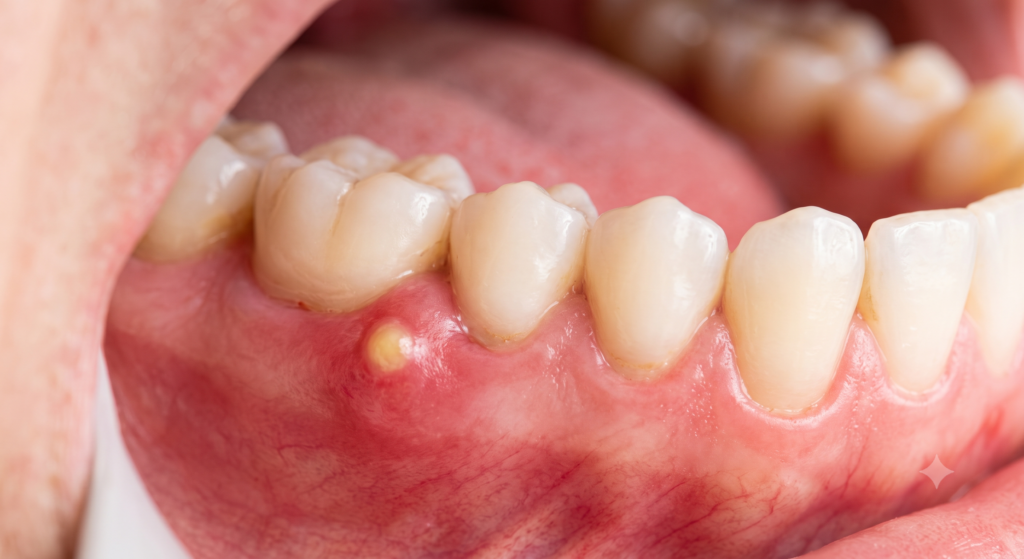
Extraction may be recommended for a tooth that is severely decayed, fractured beyond repair, affected by advanced disease or otherwise unsuitable for predictable restoration. It can also be part of orthodontic or surgical treatment in selected cases.
Before removing a tooth, the dentist should normally discuss whether it can be restored and what that would involve. When extraction is chosen, it is useful to discuss what happens afterward, including whether the missing tooth needs to be replaced and when that replacement can be considered.
Simple vs Surgical Tooth Extraction
A simple extraction is used when the dentist can access and remove the tooth relatively straightforwardly. A surgical extraction may be required when the tooth is impacted, broken at the gumline, difficult to grip or positioned in a way that needs an incision or sectioning.
The procedure is performed under local anaesthesia. You should expect pressure and movement but not sharp pain. More complex procedures may produce more swelling and soreness afterward, so ask what recovery is likely to look like before treatment.
What Happens During a Tooth Extraction?
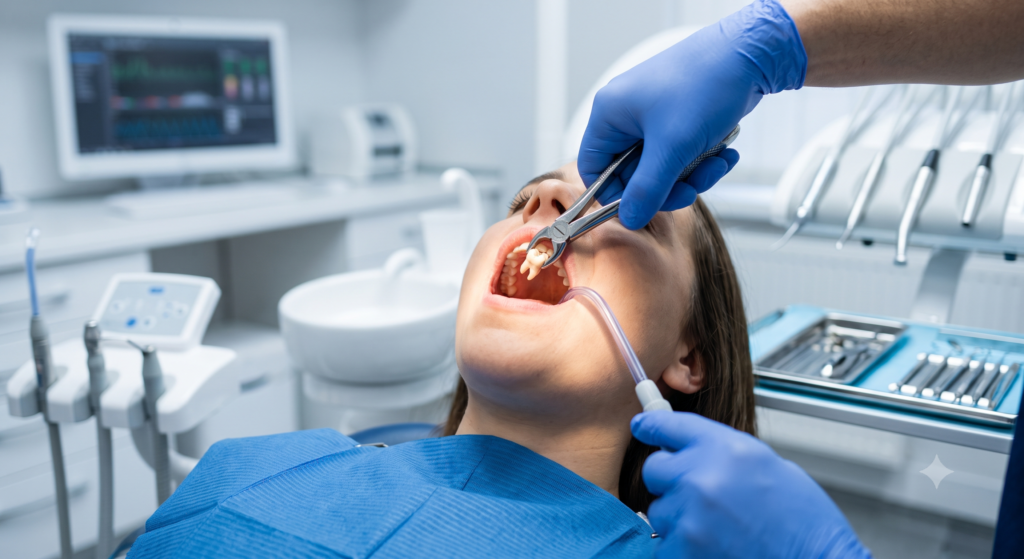
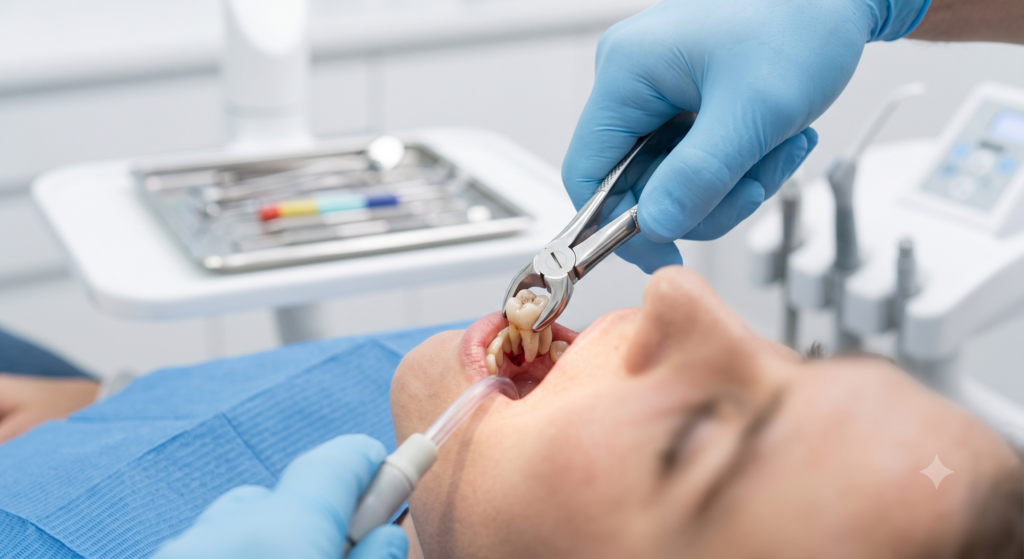
The dentist reviews the tooth and the relevant imaging, gives local anaesthesia and confirms the area is numb. The tooth is then loosened and removed, either as a whole or in sections when necessary. The socket is inspected and managed, and stitches may be placed for some surgical extractions.
Afterward, a gauze pad is usually used to support clot formation. The blood clot is an important part of healing, so the first hours should focus on protecting the site rather than aggressively cleaning it. Follow the clinic’s specific instructions because they may vary according to the procedure.
How Long Does Healing After Tooth Extraction Take?
The early phase of healing occurs over the first several days while the blood clot stabilises and soft tissues begin to repair. The socket then continues to heal gradually beneath the gum. The exact timeline varies by tooth, extraction difficulty, health and wound care.
It is normal to have some soreness and swelling, but symptoms should generally improve rather than become progressively worse. If pain suddenly intensifies after initial improvement, contact your dentist because complications such as dry socket or infection may need treatment.
What to Eat After Tooth Extraction
Choose soft foods that can be eaten comfortably without chewing directly on the extraction site. Examples include yoghurt, mashed foods, eggs, soft rice or pasta, and other foods that match your dentist’s instructions.
Avoid foods that are hard, sharp, crunchy or likely to get into the socket during early healing. Very hot foods and drinks may also be uncomfortable immediately after extraction. Drink enough fluids, but avoid practices that create strong suction on the wound unless specifically advised otherwise.
How to Reduce the Risk of Dry Socket
Dry socket occurs when the blood clot is lost or fails to remain stable, leaving the underlying area exposed and painful. Smoking is a recognised risk factor, and the ADA recommends avoiding cigarette smoking or other tobacco use while the socket heals.
Follow post-extraction instructions carefully, avoid aggressively rinsing or poking the socket early on, and do not use straws if your clinician advises against them. Once the initial healing period has passed, keep the mouth clean according to the instructions you were given.
Pain After Tooth Extraction: What Is Normal?
Pain and tenderness are expected to some degree after extraction, particularly once the anaesthetic wears off. The amount depends on the tooth and the procedure. Your dentist can advise on appropriate pain relief based on your medical history.
What matters is the pattern. Mild or moderate discomfort that gradually improves is different from severe pain that intensifies, especially after a few days. Worsening swelling, fever, foul taste or uncontrolled bleeding should also prompt a review.
When Can You Return to Normal Activities?
Many people can return to light routine activities relatively quickly after a straightforward extraction, but more difficult surgical procedures may require more downtime. Your dentist will consider the procedure, bleeding risk, pain, swelling and any sedation or anaesthesia used when giving activity advice.
Avoid strenuous activity for the period advised by your clinician, particularly in the early phase when a stable clot is important. If you feel unwell or symptoms are not improving, contact the clinic rather than pushing through the recovery.
Do You Need to Replace an Extracted Tooth?
Not every extracted tooth needs immediate replacement. A back tooth may sometimes be monitored depending on the function and surrounding teeth, while a missing front tooth or important chewing tooth may benefit from replacement.
Options can include a dental implant, bridge or denture depending on bone, gum health, the location of the tooth and your preferences. It is useful to discuss the replacement plan before or soon after extraction, because some treatment decisions can affect future options.
| After extraction | Typical guidance |
|---|---|
| Bleeding | Bite on the gauze provided and follow the dentist’s instructions if bleeding continues. |
| Pain and swelling | Some discomfort and swelling can occur and may be managed as advised by the dental team. |
| Eating | Choose softer foods initially and avoid disturbing the extraction site. |
| Oral hygiene | Keep the mouth clean while following the specific instructions given after the extraction. |
| Follow-up | Seek dental advice if pain, swelling, bleeding or other symptoms become severe or worsen. |
Extraction Is One Step in a Larger Dental Plan
Tooth extraction can be the right treatment when a tooth cannot be predictably restored or when removal is indicated for another clinical reason. Good aftercare is focused on protecting the blood clot, keeping the mouth clean as instructed and watching the recovery pattern. Before extraction, ask about alternatives and what will happen to the missing-tooth space afterward. Planning the next step early can help preserve chewing function, appearance and oral health.
FAQs About Tooth Extraction
How painful is a tooth extraction?
The area is numbed with local anaesthesia, so you should not feel sharp pain during routine extraction. Soreness afterward is common and varies by procedure complexity.
How long does it take to heal after an extraction?
Initial healing begins over the first several days, while deeper tissue and bone healing continue for longer. Your dentist can give a more specific timeline based on the tooth and procedure.
What should I avoid after tooth extraction?
Avoid smoking, vigorous rinsing and activities or foods that may disturb the blood clot. Follow the exact aftercare instructions provided by your dentist.
What is dry socket?
Dry socket is a painful complication associated with loss or disruption of the blood clot in the extraction socket. It should be assessed and treated by a dentist.
What can replace an extracted tooth?
Depending on the location and your oral health, options can include a dental implant, bridge or denture. Some gaps may also be monitored depending on function and clinical circumstances.