Key Takeaways
- Only natural tooth structure can be whitened; tooth-coloured restorations do not change colour in the same way.
- Professional whitening and dentist-supplied home systems can be more controlled than unsupervised DIY approaches.
- Temporary sensitivity and gum irritation are common side effects of vital tooth whitening.
- “Natural” whitening hacks can still be abrasive or irritating, so safety should come before trends.
- Whitening results are influenced by diet, tobacco exposure, oral hygiene, starting shade and the type of discoloration.
Teeth whitening can improve the appearance of natural teeth with extrinsic or intrinsic discoloration, but the best method depends on the cause of staining, your oral health and whether you have fillings, crowns or veneers. Professional and over-the-counter options are not interchangeable, and “natural” does not always mean safer.
A good whitening plan starts with assessment rather than gel selection. Cavities, gum inflammation, exposed roots or existing restorations may need attention first. This guide compares clinic-based and home options, explains common sensitivity concerns and shows how to maintain results without damaging the teeth or gums.
What Causes Teeth to Look Yellow or Stained?
Tooth colour can change for different reasons. Surface or extrinsic staining can build up from pigmented foods and drinks, tobacco exposure and other environmental factors. Intrinsic discoloration involves changes within the tooth and may respond differently to bleaching. Age-related changes can also make teeth appear darker as enamel becomes thinner and underlying dentin shows through more.
Because the cause matters, a dental examination is useful before whitening. Professional cleaning may remove some surface deposits, while true bleaching is designed to change the shade of natural tooth structure. Choosing the wrong approach can lead to disappointment, especially when the problem is a restoration or deep intrinsic discoloration.
Professional Teeth Whitening vs DIY Kits
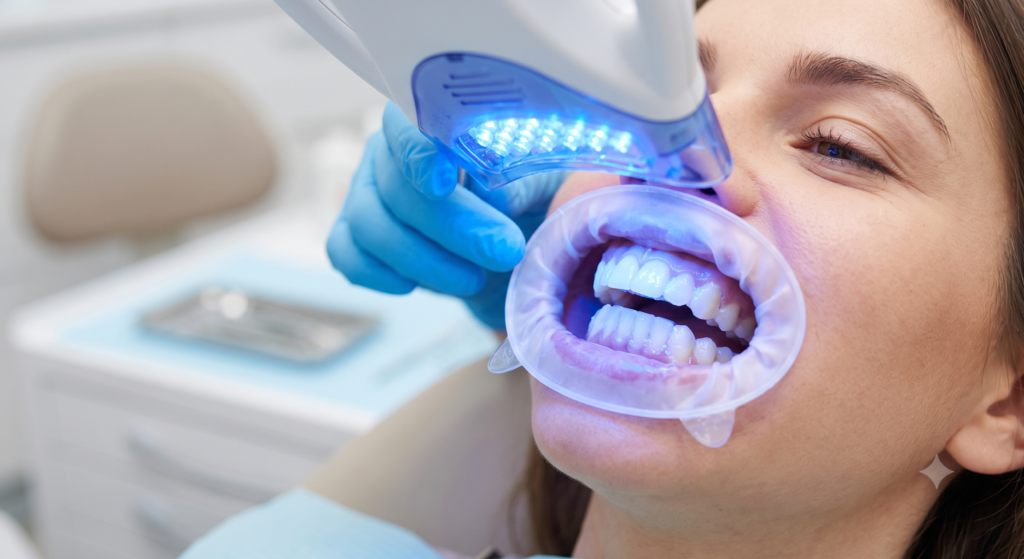
Professional whitening usually gives the clinician more control over the concentration, application and protection of the gums. Dentist-supplied take-home systems can also be customised to fit the patient. Over-the-counter strips and other products vary considerably in formulation and concentration.
The key difference is not simply “professional equals white” and “DIY equals bad.” The safer comparison is controlled use after assessing the teeth and gums versus unsupervised use without a clinical check. If you have sensitivity, gum recession, decay or existing restorations, those factors should be considered first.
Is Teeth Whitening Safe?
When used appropriately, whitening is generally considered safe for eligible patients, but temporary sensitivity and gingival irritation are common. Problems become more likely when products are overused, applied incorrectly or used on teeth that already have untreated disease.
A dentist can explain whether whitening is appropriate and how to manage sensitivity. Follow the product instructions and clinical advice rather than increasing frequency or contact time to chase faster results. Whitening is cosmetic; it should not substitute for treatment of cavities, gum disease or other oral health conditions.
How Long Does Teeth Whitening Last?
Whitening is not permanent. The duration of visible improvement depends on the starting shade, diet, oral hygiene, tobacco exposure, enamel characteristics and the type of whitening system used. Regular exposure to coffee, tea or other strongly pigmented foods and drinks can contribute to new surface staining over time.
Maintenance usually focuses on sensible oral hygiene and limiting habits that promote staining. Touch-up whitening may be appropriate for some patients, but it should be planned with the same attention to product instructions and sensitivity as the initial treatment.
How to Reduce Sensitivity During Whitening
Sensitivity can occur because peroxide-based whitening agents can temporarily affect the way the tooth responds to stimuli. If you already have sensitive teeth, the cause should be investigated before treatment. Exposed roots, cracks, decay or enamel wear may require different management.
A dentist may suggest a lower-strength or adjusted whitening plan, shorter exposure periods or desensitising approaches depending on the product and patient. Do not assume more gel or longer application will produce a better result; it can increase irritation without improving the outcome proportionally.
Can Whitening Change Crowns, Veneers or Fillings?
Whitening works on natural tooth structure. Tooth-coloured fillings, ceramic crowns, veneers and other restorations do not bleach in the same way. If they are noticeably darker than the newly whitened teeth, the colour mismatch can become more visible.
This is why patients with visible front restorations should discuss the sequence of treatment with a dentist. In some cases, whitening is done first so that any replacement restoration can be matched to the final tooth shade.
Natural Teeth Whitening Hacks: What to Avoid
Social media often promotes acidic or abrasive ingredients as “natural” whitening. The fact that an ingredient comes from a kitchen does not make it safe for enamel or gums. Abrasive methods can wear the tooth surface, while strong acids can contribute to erosion.
The safer approach is to use evidence-based products as directed and have persistent discoloration assessed. The ADA warns consumers about DIY dental trends and specifically cautions that natural whitening approaches are not automatically healthy.
When Should You Get a Dental Check-Up Before Whitening?
A dental examination is particularly important if you have tooth pain, bleeding gums, cavities, loose fillings, significant sensitivity, gum recession, cracks or unexplained changes in tooth colour. Whitening an unhealthy mouth can make symptoms more difficult to interpret and may worsen irritation.
For a cosmetic plan, ask the dentist to assess your gums, existing restorations and the type of staining. A clinic that offers cleaning, restorative care and cosmetic dentistry can then sequence the treatments appropriately rather than treating whitening as an isolated purchase.
How to Keep Teeth Looking Brighter After Whitening
Brush twice daily with fluoride toothpaste, clean between your teeth every day and keep regular dental appointments. These habits help control plaque and surface deposits. Professional cleaning can also reduce some extrinsic staining, although it is not a substitute for bleaching.
If you consume coffee, tea or other highly pigmented foods and drinks frequently, moderation and practical habits can help reduce recurrent staining. Tobacco use can also contribute to discoloration and oral disease. The goal after whitening is not to chase a permanently artificial shade; it is to maintain a healthy, natural-looking result.
| Option | What to know |
|---|---|
| Professional whitening | Delivered or supervised by a dental professional and tailored to the patient’s needs. |
| Home whitening from a dentist | Uses dentist-provided products and instructions for controlled home treatment. |
| Whitening toothpaste | May help remove some surface stains but does not provide the same effect as bleaching. |
| Over-the-counter products | Results and suitability vary, so check the product and consider professional advice if unsure. |
| Existing restorations | Crowns, veneers and fillings do not whiten like natural tooth enamel. |
The Best Teeth Whitening Plan Starts With Healthy Teeth
Teeth whitening can be effective, but the right method depends on why the teeth look darker and whether your mouth is healthy enough for cosmetic treatment. Professional assessment can prevent common surprises such as sensitivity, untreated decay or mismatched restorations. For safer results, use appropriate whitening products as directed, avoid abrasive DIY hacks and focus on maintenance rather than repeated aggressive treatments. A brighter smile is most useful when it is part of a healthy, well-planned dental care routine.
FAQs About Teeth Whitening
Does teeth whitening damage enamel?
Appropriately used whitening products are generally considered safe for eligible teeth, but sensitivity and gum irritation can occur. Overuse or misuse can increase problems, so follow clinical and product instructions.
Can I whiten crowns or veneers?
No. Whitening changes natural tooth structure; crowns, veneers and many tooth-coloured restorations do not whiten in the same way.
Why are my teeth sensitive after whitening?
Temporary sensitivity is a common side effect of vital tooth whitening. Existing sensitivity, exposed roots or untreated dental problems can make symptoms more noticeable.
Is professional whitening better than home whitening?
Professional treatment offers greater clinical control, while dentist-supplied home systems can provide gradual whitening. The best choice depends on your teeth, goals and tolerance.
Are lemon or baking soda whitening hacks safe?
They are not recommended as a routine whitening strategy. Acidic or abrasive DIY methods can irritate gums or wear dental surfaces and do not offer the same controlled approach as evidence-based whitening products.