Key Takeaways
- A wisdom tooth is more likely to need treatment when it causes disease, repeated infection, damage or other clinically important problems.
- An X-ray or other imaging can help the dentist assess position and roots before removal.
- Local anaesthesia is commonly used; sedation may be considered for selected patients.
- Soft foods and careful cleaning are useful during the early healing period.
- Severe worsening pain, uncontrolled bleeding, fever, facial swelling or breathing/swallowing problems require prompt dental or emergency assessment.
Wisdom teeth are the third molars at the back of the mouth. They can erupt normally and remain healthy, but they can also become impacted, partly covered by gum, difficult to clean or associated with pain, infection, decay or damage to nearby structures. Removal is not automatically required simply because a wisdom tooth exists.
The decision usually follows an examination and appropriate imaging. If removal is recommended, the complexity depends on tooth position, roots, available space and surrounding anatomy. This guide explains common reasons for removal, what surgery can involve and how to protect the extraction site during recovery.
When Do Wisdom Teeth Need Removal?
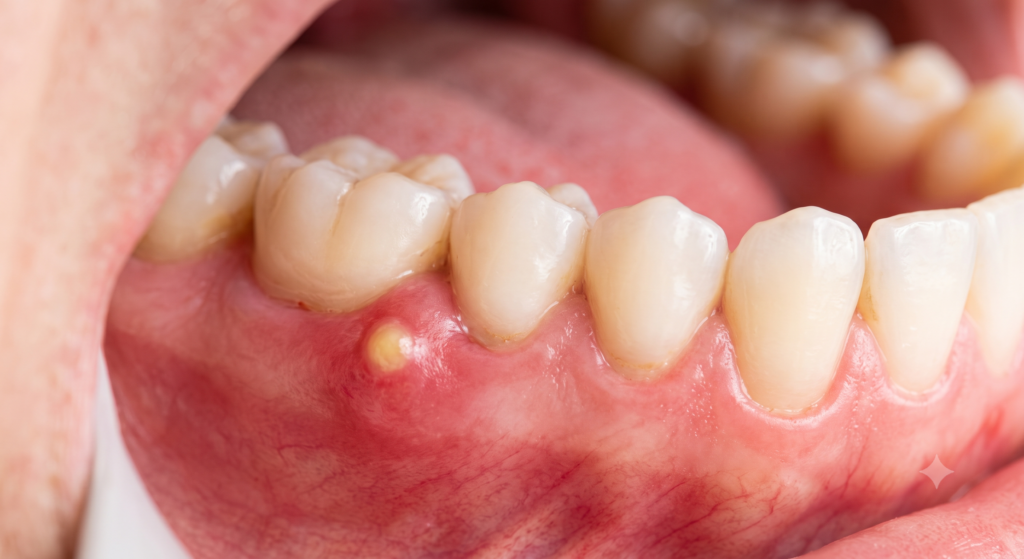
Wisdom teeth can cause problems when there is insufficient room for normal eruption, when they remain partly covered by gum, or when their position makes cleaning difficult. Problems can include food trapping, decay, gum infection around a partially erupted tooth, cystic changes or damage to a neighbouring tooth.
A dentist should assess the individual situation rather than using a blanket rule that every wisdom tooth must be removed. The American Dental Association notes that treatment decisions should consider the patient’s mouth, symptoms and findings, with imaging used when indicated.
7 Signs Your Wisdom Tooth May Need Assessment
Common reasons to seek an assessment include recurring pain around the back molar, swelling, unpleasant taste or discharge, difficulty opening the mouth, food repeatedly getting trapped, gum inflammation around a partially erupted tooth and decay in the wisdom tooth or adjacent tooth.
Symptoms do not tell the whole story. Some impacted teeth cause no immediate pain but can still create cleaning challenges or pathology. That is why a dentist may recommend an examination and X-ray even when discomfort is intermittent.
What Happens During Wisdom Tooth Removal?
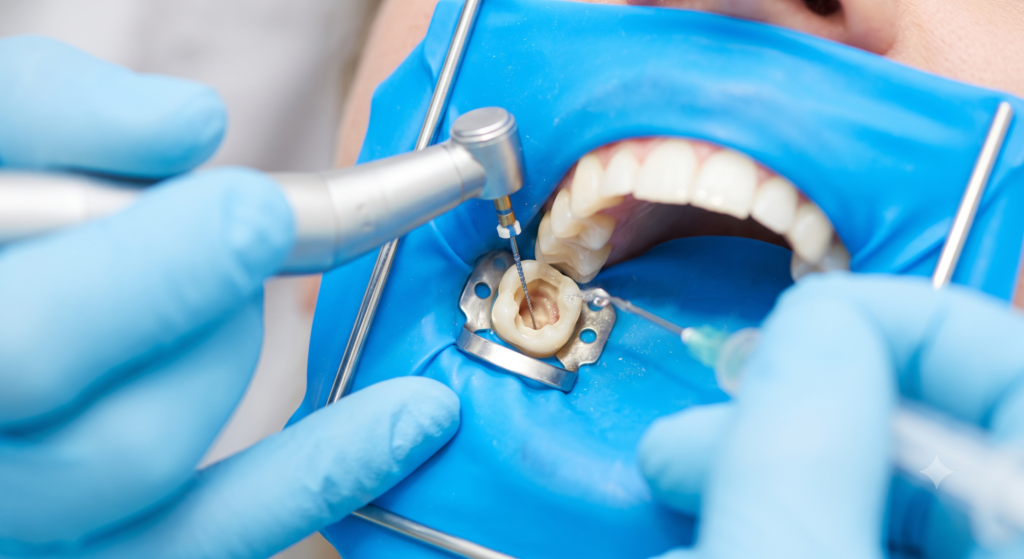
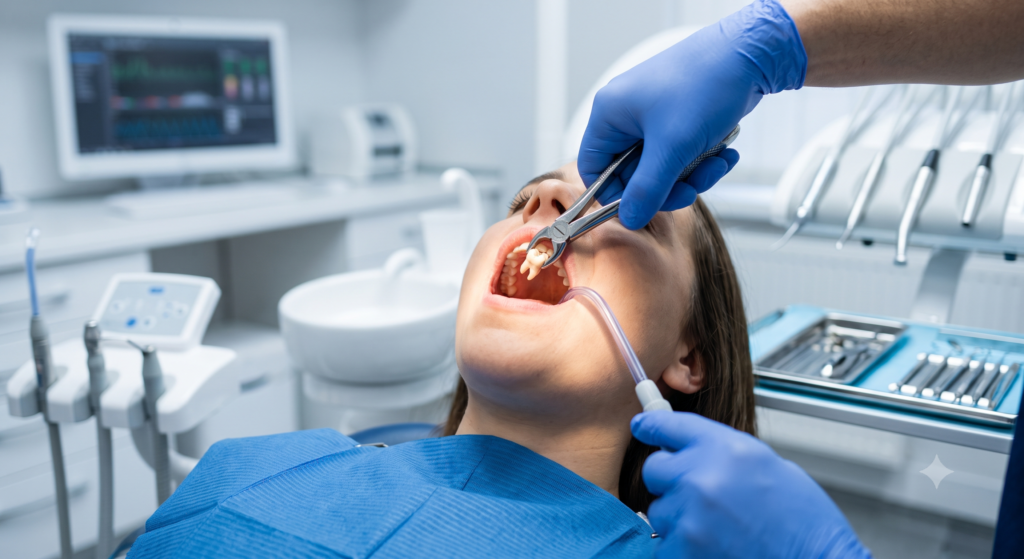
The dentist or oral surgeon will review the tooth’s position and explain the planned approach. Local anaesthesia is used so the area is numb. A simple extraction may involve loosening and removing the tooth, while a surgical extraction can require an incision in the gum and sectioning of the tooth when necessary.
Stitches may be placed depending on the procedure, and patients typically go home the same day after routine treatment. More complex cases can take longer and may require referral or specialist management based on anatomy and patient needs.
Is Wisdom Tooth Extraction Painful?
The goal during the procedure is to prevent pain with local anaesthesia. You may feel pressure, movement or vibration, particularly during a surgical extraction. If you feel pain, tell the clinician immediately.
After the anaesthetic wears off, soreness and swelling are common. The amount varies with the difficulty of the extraction and individual healing. Follow your dentist’s instructions for pain relief and wound care, and do not exceed recommended medication doses.
What to Eat After Wisdom Tooth Extraction
Start with foods that are easy to chew and unlikely to disturb the extraction site. Soft foods can include yoghurt, soups that are not very hot, mashed vegetables, scrambled eggs and other smooth or soft meals. As comfort improves, gradually reintroduce firmer foods.
Avoid foods that are hard, crunchy or likely to become trapped in the wound. Extremely hot foods and drinks can increase discomfort or bleeding risk early on. Your dentist may give specific instructions based on whether stitches were used and how difficult the extraction was.
How Long Does Wisdom Tooth Recovery Take?
Initial swelling and soreness often improve over the first several days, but the socket continues to heal after the discomfort subsides. Recovery time varies with surgical difficulty, the number of teeth removed, age, health and adherence to aftercare.
A normal recovery should trend toward improvement. Severe or worsening pain, persistent bleeding, bad taste with fever, increasing facial swelling or difficulty opening the mouth should prompt a dental review. A painful dry socket can also occur when the blood clot is lost or does not form normally.
Dry Socket: What Is It and How Can You Reduce the Risk?
Dry socket is a painful post-extraction condition associated with loss or disruption of the blood clot in the socket. Smoking and activities that disturb the wound can increase risk. The ADA describes treatment as cleaning the socket and, when appropriate, placing a medicated dressing.
Protect the blood clot by following your dentist’s instructions, avoiding smoking, not aggressively rinsing the mouth early in healing and keeping the area clean as instructed. Do not poke the socket or try to remove material from it yourself.
Why Imaging Matters Before Impacted Wisdom Tooth Surgery
Imaging can show whether the tooth is tilted, buried, close to neighbouring teeth or positioned near important anatomical structures. The exact imaging needed depends on the case. A standard dental X-ray may be sufficient, while more complex cases may benefit from 3D imaging.
The purpose of imaging is planning and risk assessment—not simply producing a picture. Before surgery, ask what the image shows, whether it changes the extraction approach and whether a specialist referral is appropriate.
When Is Wisdom Tooth Removal an Emergency?
An infected or badly inflamed wisdom tooth can become an urgent dental problem, particularly when there is spreading swelling, fever, severe pain or difficulty opening the mouth. Some symptoms require immediate emergency attention, especially difficulty breathing or swallowing or rapidly increasing facial swelling.
Do not rely on painkillers to postpone assessment when an infection is suspected. A dentist can identify the cause and determine whether drainage, extraction, root canal treatment of another tooth, antibiotics or another intervention is appropriate.
| Situation | Why removal may be considered |
|---|---|
| Impaction | A wisdom tooth may be unable to erupt normally because there is not enough space. |
| Repeated infection | Partially erupted teeth can be difficult to clean and may develop recurring inflammation. |
| Decay | Limited access can make an affected wisdom tooth difficult to keep healthy. |
| Damage to nearby structures | The position of a wisdom tooth may contribute to problems involving neighbouring teeth or bone. |
| No disease or symptoms | Removal is not automatically necessary; the decision depends on examination and individual risk. |
Wisdom Tooth Removal Should Be Based on the Individual Case
Wisdom tooth removal is not a one-size-fits-all procedure. Some wisdom teeth stay healthy and need monitoring, while others cause repeated infection, decay, damage or other problems that make treatment worthwhile. If removal is advised, understanding the tooth’s position, the surgical approach and the recovery plan can make the experience much easier. Follow the aftercare instructions closely, protect the extraction site and seek prompt help when symptoms are severe or getting worse.
- https://www.ada.org/sitecore/content/ADA-Organization/ADA/MouthHealthy/home/all-topics-a-z/wisdom-teeth
- https://www.nhs.uk/tests-and-treatments/wisdom-tooth-removal/
- https://www.ada.org/sitecore/content/ADA-Organization/ADA/MouthHealthy/home/all-topics-a-z/dry-socket
- https://implantandsurgerycentre.com/services/
FAQs About Wisdom Teeth Removal
Do all wisdom teeth need to be removed?
No. Healthy wisdom teeth that are functional and disease-free may be monitored. Removal is generally based on symptoms, pathology, damage or other clinical considerations.
How long does wisdom tooth surgery take?
Simple extractions can be quick, while impacted surgical removals take longer. The time depends on the tooth position, roots and procedure complexity.
What should I eat after wisdom tooth extraction?
Choose soft, comfortable foods and avoid hard, crunchy or very hot foods early in recovery. Progress to normal foods as chewing becomes comfortable and your dentist permits.
What is dry socket?
Dry socket is a painful complication associated with loss or disruption of the blood clot in the extraction socket. It needs assessment and appropriate treatment if it occurs.
When should I call a dentist after wisdom tooth removal?
Seek advice for bleeding that does not stop, severe or worsening pain, increasing swelling, fever, foul taste with worsening symptoms, or difficulty opening the mouth. Breathing or swallowing difficulty is an emergency.