Key Takeaways
- Root canal treatment aims to save a natural tooth when the pulp is irreversibly damaged or infected.
- Modern treatment uses local anaesthesia and careful cleaning and shaping of the root canals.
- The number of visits varies by tooth, infection and treatment plan; one-visit treatment is possible in selected cases.
- A tooth that has had root canal treatment often needs a durable restoration to protect it from fracture.
- Persistent swelling, severe pain or a loose restoration after treatment should be reviewed by the treating dentist.
Root canal treatment is designed to remove infection or inflamed tissue from inside a tooth so the tooth can be cleaned, sealed and, when possible, retained. It is often recommended when decay, cracks, trauma or another problem has affected the dental pulp.
People often worry about pain, treatment time and cost. The reality is that the appointment plan depends on the tooth, the infection, the restoration needed afterward and the clinician’s findings. This guide explains the purpose of root canal treatment, the usual stages, what recovery can feel like and when a root canal is preferable to simply removing a tooth.
Why Is Root Canal Treatment Needed?
Inside each tooth is a soft tissue called the pulp containing nerves and blood vessels. Deep decay, repeated dental procedures, cracks or trauma can allow bacteria to reach this space and lead to inflammation or infection. When the pulp cannot recover, root canal treatment may be recommended to remove the diseased tissue rather than extracting the tooth.
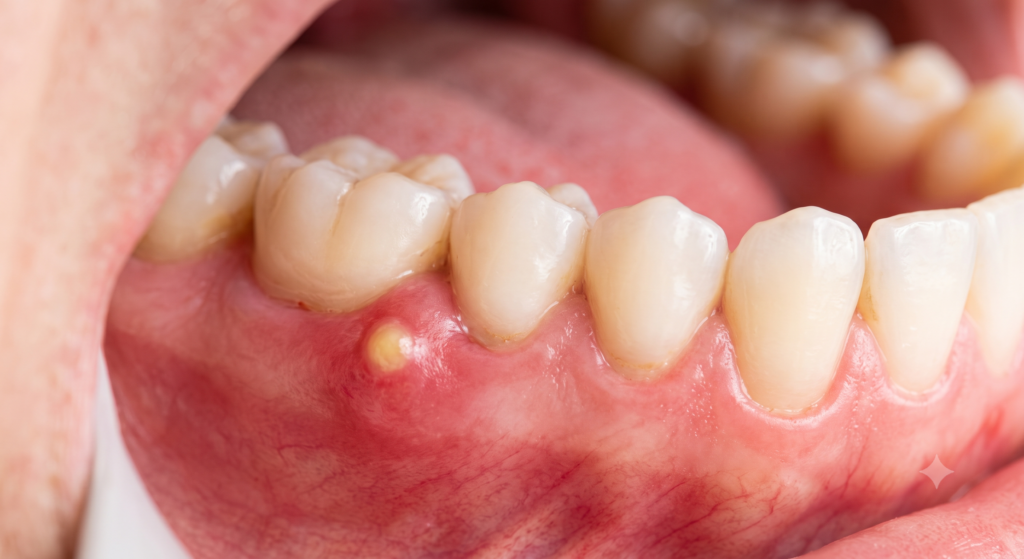
Symptoms can include prolonged sensitivity to hot or cold, pain when chewing, spontaneous toothache, swelling or a gum pimple. Some infected teeth have surprisingly few symptoms, which is why an examination and appropriate imaging matter when a dentist suspects pulp or root-area disease.
Does Root Canal Treatment Hurt?
Root canal treatment is performed with local anaesthetic, so the aim is to keep the procedure comfortable. Patients may still feel pressure or vibration, but sharp pain during treatment should be addressed immediately with the clinician. Fear of root canal treatment is often greater than the discomfort of the procedure itself.
Afterward, the tooth and surrounding tissues may feel tender, particularly if there was significant inflammation before treatment. This should generally improve as healing progresses. Your dentist can advise on appropriate pain control based on your health history and other medicines.
Step-by-Step: What Happens During a Root Canal?
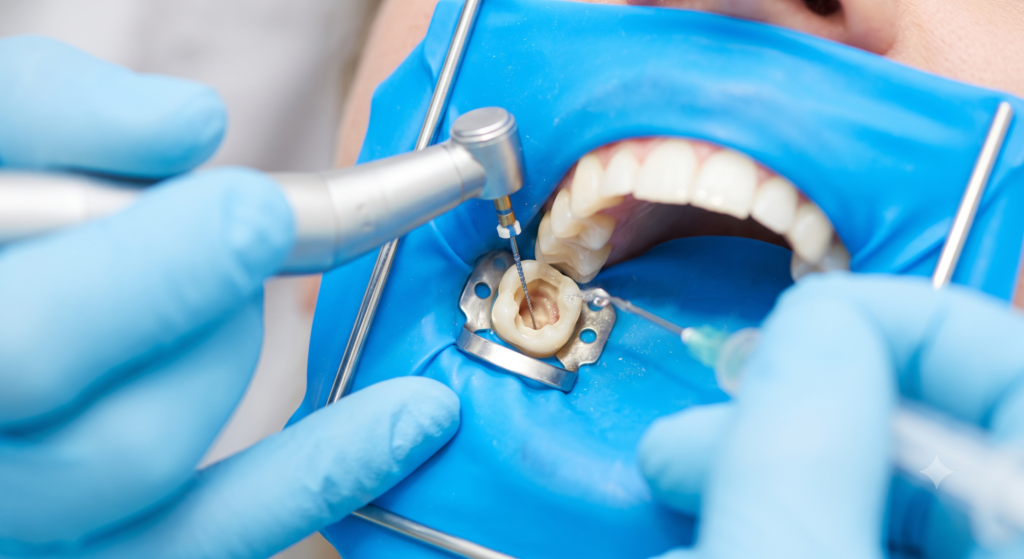
The dentist first examines the tooth and determines whether the pulp and surrounding tissues are involved. Imaging may help assess the root structure and the extent of infection. Local anaesthesia is then used, and the tooth is isolated to keep the treatment area clean.
An opening is made in the tooth so the diseased pulp can be removed. The canals are cleaned and shaped, disinfected and then filled with a sealing material. In some cases, medication and a temporary filling are placed between appointments. Once the root canal is completed, the tooth is restored with a filling, onlay or crown as appropriate.
How Long Does a Root Canal Take?
Treatment time varies according to the tooth and complexity of the canals. Front teeth and some straightforward cases may be simpler, while molars usually have more canals and can require more time. Retreatment of a previously treated tooth can also be more complex.
Some practices offer single-sitting root canal treatment for selected cases. Implant & Surgery Centre states that it provides single-sitting and laser-guided root canal services, but whether a tooth can be completed in one visit should be determined after clinical assessment rather than assumed from the treatment name.
Root Canal vs Filling: When Do You Need Which?
A filling is used when decay or damage has affected the tooth but the pulp remains healthy enough to be preserved. Root canal treatment becomes relevant when the pulp is infected or irreversibly inflamed and the tooth cannot be predictably maintained with a simple filling.
The decision is based on symptoms, clinical testing, imaging and the amount of remaining tooth structure. Trying to treat a severely inflamed or infected pulp with a filling alone does not address disease inside the root canal system.
Root Canal vs Extraction: Which Is Better?
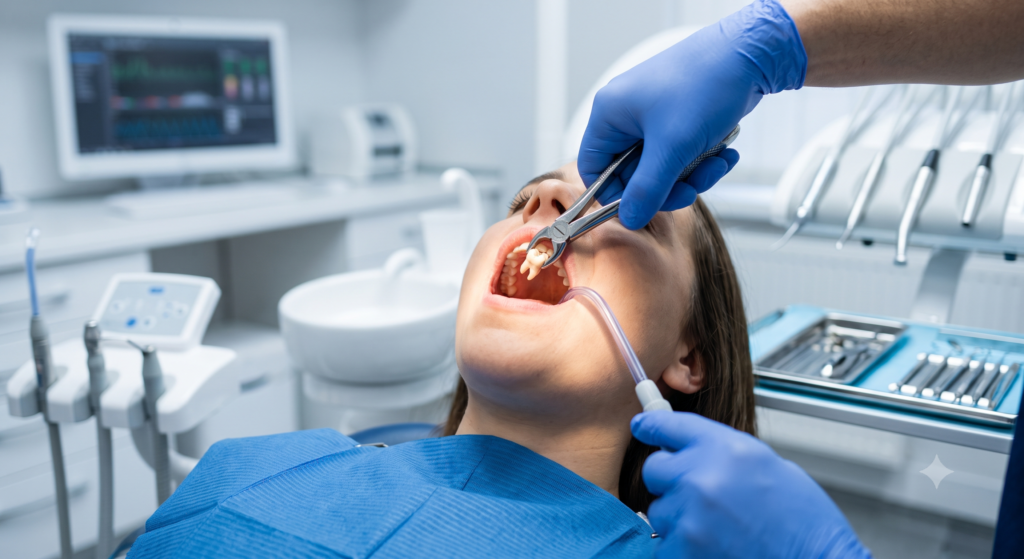
Saving a natural tooth is often desirable when the tooth can be predictably restored. Root canal treatment can eliminate infection while preserving the tooth for a restoration. Extraction removes the tooth but creates a missing-tooth space that may later require a bridge, denture or implant if replacement is desired.
There are situations where a tooth is too fractured, severely damaged or otherwise non-restorable and extraction may be the appropriate option. A good consultation should discuss both the prognosis of the tooth and what replacement would involve if it cannot be saved.
What Happens After Root Canal Treatment?
After treatment, avoid chewing hard foods on a tooth that has a temporary filling until your dentist confirms that it is ready for definitive restoration. Attend any follow-up appointments and maintain normal oral hygiene around the treated tooth.
A root-filled tooth can remain functional for many years when the treatment is successful and the final restoration protects the tooth. Report new swelling, persistent severe pain, a bad taste, a loose filling or a tooth that feels significantly different when biting.
How Much Does Root Canal Treatment Cost?
The cost is influenced by which tooth is treated, how complex the canals are, whether the case is a first-time treatment or retreatment, the imaging required and the restoration needed afterward. A simple-looking online price may not include the permanent restoration, additional imaging or follow-up.
When comparing quotes, ask for a written explanation of what is included. At a specialist or multi-specialty clinic, also ask whether the case will be handled by a dentist with endodontic experience and what happens if additional treatment is needed.
How to Choose a Root Canal Dentist Near You
Look for a clinic that explains the diagnosis, shows you the relevant imaging when appropriate and discusses alternatives. Modern endodontic equipment can support accurate cleaning and treatment planning, but technology should serve diagnosis and technique rather than replace them.
Implant & Surgery Centre lists conventional, single-sitting and laser-guided root canal services, along with digital imaging and broader restorative care. These services can be useful when a root canal is part of a larger treatment plan involving a crown or other restoration.
| Stage | What usually happens |
|---|---|
| Assessment | The dentist examines the tooth and may use dental X-rays or other appropriate imaging. |
| Local anaesthesia | The tooth and surrounding area are numbed to keep treatment comfortable. |
| Cleaning the canals | Infected or inflamed tissue is removed and the root canals are cleaned and shaped. |
| Sealing | The cleaned canals are filled and sealed to reduce the risk of reinfection. |
| Restoration | The tooth may need a filling or crown to restore strength and function. |
Root Canal Treatment Is About Saving the Tooth
Root canal treatment is not simply a procedure for tooth pain; it is a treatment for disease inside the tooth. A proper diagnosis helps determine whether the pulp can recover, whether a root canal can predictably save the tooth, and what restoration is needed afterward. Ask about the diagnosis, expected number of visits, restoration, aftercare and alternatives before starting. When symptoms such as swelling, persistent pain or chewing discomfort are present, early dental assessment is more useful than waiting for the problem to settle on its own.
FAQs About Root Canal Treatment
Does root canal treatment hurt?
Local anaesthesia is used to numb the tooth during treatment. Some tenderness can occur afterward, but severe or worsening pain should be reviewed by the treating dentist.
How many visits does a root canal need?
It depends on the tooth, infection, canal anatomy and treatment approach. Some selected cases can be completed in one visit, while others need multiple appointments.
Do I need a crown after a root canal?
Many root-treated teeth benefit from a durable final restoration, particularly when a substantial amount of tooth structure has been lost. The exact restoration depends on the tooth and remaining structure.
Can a root canal fail?
Root canal treatment can have complications or persistent disease. The prognosis depends on the original infection, anatomy, treatment quality, restoration and other factors. Persistent symptoms need reassessment.
Is extraction better than root canal treatment?
Not automatically. If a tooth can be predictably saved and restored, retaining the natural tooth can be valuable. If the tooth is non-restorable, extraction may be appropriate.